real estate trends
Why 3D Floor Plans Took Over
Real Estate in 2025–2026
Real Estate in 2025–2026
A New Standard for Selling, Renting, and Decorating Homes Online
Sometimes it’s funny how fast things change. A couple of years back, most listings had the same mix: a few wide-angle photos, a rough 2D plan, maybe a video that nobody watched till the end. And then suddenly, in 2025, it felt like every serious agent started posting these bright, almost tactile 3D floor plans. Buyers began trusting them more. Renters lingered on listings longer. Even small Airbnb hosts jumped in because their bookings depended on standing out for a second longer in someone’s endless scrolling.
When people are trying to rent, buy a house, or pick a place for a weekend trip, they want clarity. They want to understand where the sofa might go, whether the bedroom gets light in the morning, if their kids’ beds will actually fit. Photos can catch emotions, sure, but they almost always distort space. A 3D plan does the opposite — it settles the doubt. It shows the shape of a life that could fit there.
And for Airbnb owners, it became a kind of survival strategy. Travelers compare dozens of rentals at once, and honestly, they rarely read descriptions anymore. A single 3D plan shows the layout better than ten photos. Guests stop wondering, “Wait… is the sofa bed in the same room as the kitchen?” They book faster because they see the whole space before clicking “Reserve.”
Around this time, something else happened: decor trends exploded. Folks returning to the market after years away wanted to visualize “their” style — softer woods, bold paint, minimalist furniture. A clean 3D layout makes that imagination easier. I’ve seen people stare at a rendering and instantly start planning where the dining table will stand. It’s almost a small daydream they can hold.
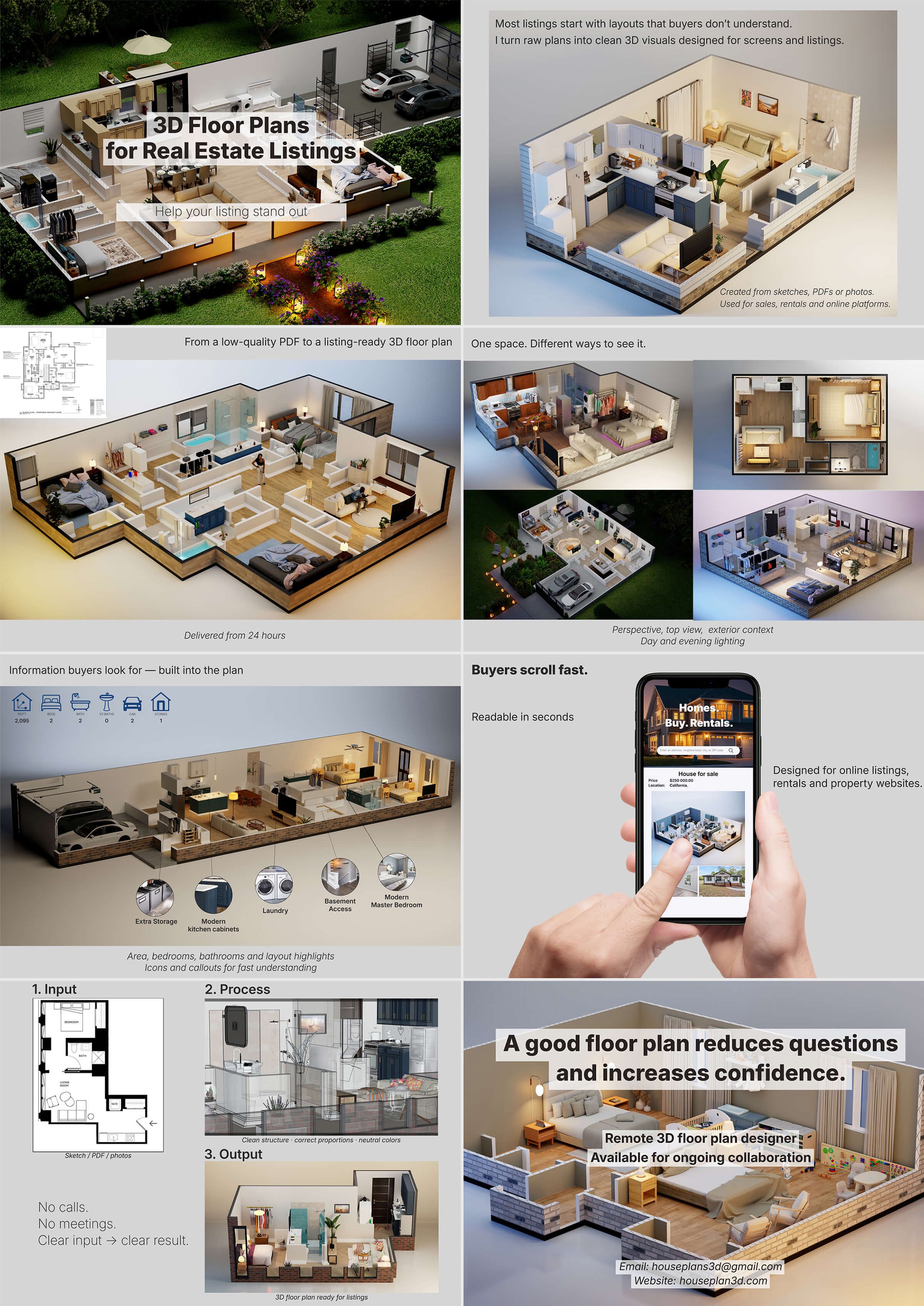
3D floor plan view of living room with furniture, decor and flow
Developers caught on too. Pre-construction projects needed a way to convince buyers without a physical house standing there. A 3D plan felt honest, almost comforting — a middle ground between imagination and reality. You can see the proportions, the flow, the way rooms connect. Even investors, who usually just want the numbers, realized how much easier it is to market a unit when it has a clean 3D overview attached.
The real push came from how people shop now. We buy everything through a screen. Houses included. If people can’t step inside yet, at least let them walk through with their eyes. A 3D plan does exactly that. It reduces those awkward showings where someone arrives and instantly says, “Oh… this isn’t what I expected.” Listings with 3D layouts filter out the mismatches. The ones who come are already halfway convinced.
It’s strange, but once you get used to these modern layouts, going back to a simple 2D drawing feels like trying to read a map from the 90s. Too flat, too abstract. In 2026, the market almost treats 3D as a standard. Agents who skip it feel outdated, and homeowners notice the difference quickly when their listing sits there with no calls.
Curiosity about life in all its aspects, I think, is still the secret of great creative people.
So why did 3D floor plans take over? Because they make everything easier — renting, decorating, buying a house, booking a stay, even imagining a future. They answer questions that photos hide. They let people trust what they’re looking at. And right now, in a world where almost every decision starts with a phone screen, that trust is everything.